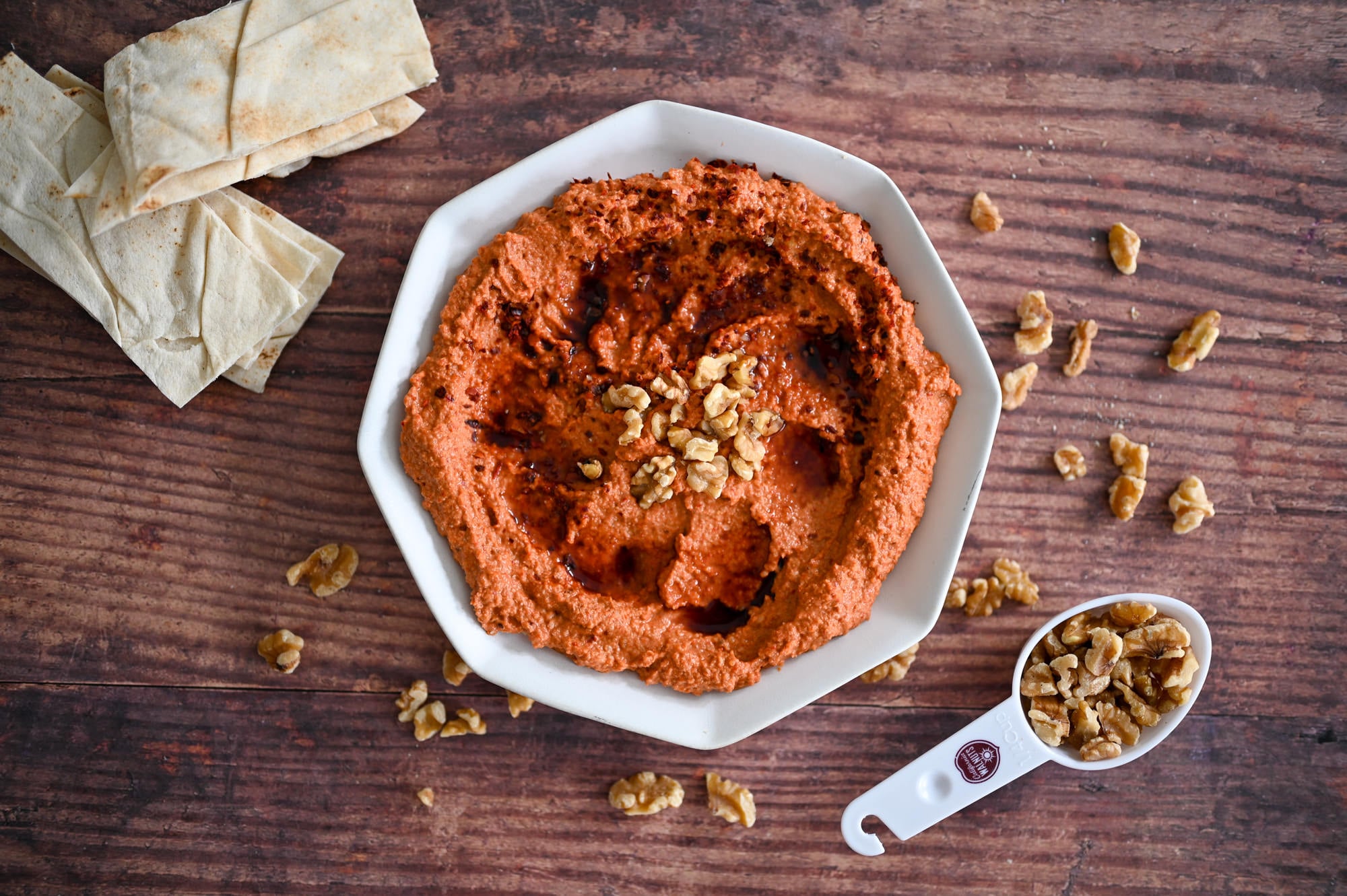
A Culinary Jewel from Aleppo: The Story of Muhammara
Muhammara, a name derived from the Arabic word "ahmar" meaning "red," is more than just a dip; it's a vibrant tapestry of flavors and a testament to the rich culinary heritage of the Middle East. With its striking crimson hue and complex profile—sweet, tangy, smoky, and subtly spicy—this beloved spread has captivated palates worldwide. At its heart, muhammara is a celebration of roasted red peppers, walnuts, and the distinctive punch of pomegranate molasses, all harmoniously blended into an unforgettable experience.
But to truly appreciate muhammara, one must journey back to its origins: the ancient city of Aleppo in Syria. Aleppo, one of the oldest continuously inhabited cities on earth, boasts a history stretching back possibly to the 6th millennium BC. This enduring legacy has fostered a culinary tradition as deep and complex as its history, giving birth to dishes that have stood the test of time. Muhammara is one such creation, a staple that embodies the spirit and flavors of its birthplace. From its humble beginnings in Aleppian kitchens, this delectable red pepper and walnut dip has transcended borders, becoming a cherished part of mezzes and dining tables across the Middle East and gaining admirers globally. Its reputation as an authentic, comforting, and uniquely flavorful dish continues to grow, inviting everyone to discover the taste of Aleppo.
Crafting the Perfect Muhammara Recipe: Essential Ingredients Explored
The magic of muhammara lies in the careful selection and combination of its core components, each playing a vital role in creating its distinctive flavor and texture. Understanding these ingredients is the first step towards mastering an authentic
muhammara recipe at home.
-
Roasted Red Bell Peppers: The Foundation of Flavor and Color
Red bell peppers are non-negotiable for any true muhammara recipe. Their mild sweetness and robust flesh transform dramatically when roasted, developing a smoky depth and incredible richness that forms the backbone of the dip. Roasting also intensifies their natural sugars and yields that signature bright red color. For best results, aim for a slight char on the skin, which can be achieved in a hot oven, under a broiler, or even directly over an open flame for an extra smoky touch. Peel the skin after roasting for a smoother texture, though some prefer to leave it on for a rustic feel and added nutrients.
-
Walnuts: The Nutty Heart and Textural Contrast
Walnuts contribute essential earthy richness and a delightful textural counterpoint to the creamy dip. While raw walnuts work, lightly toasted walnuts offer a more pronounced nutty flavor, adding another layer of complexity. Simply spread them on a baking sheet and toast in a moderate oven for about 5-7 minutes, or until fragrant. If you have a nut allergy, sunflower or hemp seeds can be considered as alternatives, though the flavor profile will inevitably shift. Experimentation is key if exploring substitutes.
-
Pomegranate Molasses: The Tangy-Sweet Signature
This thick, dark syrup, made from reduced pomegranate juice, is arguably the most crucial flavor enhancer in any traditional muhammara recipe. It delivers a unique balance of tartness and sweetness that elevates the dip, cutting through the richness of the peppers and walnuts with a vibrant, fruity tang. Pomegranate molasses is a staple in Middle Eastern pantries and can be found in specialty stores or the international aisle of larger supermarkets. If you're feeling adventurous or can't find it locally, it’s surprisingly easy to make your own with just pomegranate juice, a little sugar, and lemon. Its versatility extends beyond muhammara, making it a valuable addition to dressings, marinades, and even stews like Persian Fesenjan.
-
Aleppo Pepper Flakes: The Authentic Spice
Named after its city of origin, Aleppo pepper (or Halaby pepper) is a relatively mild chili flake with a distinctive flavor profile: fruity undertones, a hint of saltiness, and a slow-building, moderate heat that doesn't overwhelm. It adds warmth and authenticity without making the dip overtly spicy. If genuine Aleppo pepper is unavailable, a combination of sweet paprika and a pinch of a milder red chili flake (like Urfa Biber or even a tiny amount of crushed red pepper) can offer a decent substitute, though the unique fruity note of Aleppo pepper is hard to replicate.
-
Breadcrumbs: The Unsung Thickener
Plain, unseasoned breadcrumbs are vital for achieving muhammara's characteristic thick and luxurious consistency. They help absorb moisture and bind the ingredients together. Start with a smaller amount (e.g., half a cup) and gradually add more until your dip reaches the desired thickness. Stale bread, pulsed in a food processor, makes excellent homemade breadcrumbs.
-
Garlic Cloves & Fresh Lemon Juice: The Brightening Agents
A single clove (or perhaps two, depending on size and preference) of fresh garlic adds an aromatic depth without overpowering the other flavors. Remember, we're making a red pepper and walnut dip, not a garlic dip! Freshly squeezed lemon juice brightens the overall profile, enhancing the tanginess from the pomegranate molasses and adding a fresh zest. Always opt for fresh over bottled lemon juice for superior flavor.
-
Olive Oil: The Unifier
A good quality extra virgin olive oil helps to emulsify and blend all the ingredients into a smooth, creamy texture. It also contributes a subtle fruity note and a desirable richness. While you don't need the most expensive olive oil on the market, choose one with a flavor you genuinely enjoy, as it will subtly influence the final taste.
-
Optional Enhancements: Cumin and Green Onions
A touch of cumin powder can lend an earthy warmth, though it should be used sparingly to avoid dominating the other delicate flavors. Finely chopped green onions can add a fresh, pungent bite without the intensity of raw white onion, offering another layer of flavor and a touch of color. These are additions that can be tailored to personal taste, enhancing without detracting from the classic muhammara recipe.
Beyond the Bowl: Versatile Ways to Savor Your Muhammara
While muhammara shines brightly as a dip, particularly when scooped up with warm pita bread or crusty artisan bread, its culinary applications extend far beyond the mezze platter. Its rich, complex flavor profile makes it incredibly versatile, transforming ordinary meals into extraordinary experiences.
Consider muhammara as a sophisticated spread for sandwiches and wraps. Imagine a turkey and provolone sandwich elevated with a generous smear of this vibrant dip, or a vegetarian pita pocket bursting with fresh vegetables and the nutty, tangy goodness of muhammara. It also makes an exceptional base for toast, whether for a quick breakfast or a light lunch, perhaps topped with a poached egg and a sprinkle of fresh herbs.
For those who love grilled meats, muhammara serves as an exquisite accompaniment. Its sweetness and tang cut through the richness of lamb, chicken, or beef, adding a burst of flavor that complements without overpowering. It can even be thinned slightly and used as a unique dressing for grain bowls or roasted vegetable salads, infusing them with a taste of the Middle East. Don't shy away from experimenting: spread it on pizza dough before adding cheese and toppings for a gourmet twist, or serve it alongside a cheese board with fruit and crackers for an unforgettable appetizer. Its versatility truly knows no bounds.
When it comes to storage, freshly made muhammara will keep beautifully in an airtight container in the refrigerator for up to 5-7 days. A drizzle of olive oil on top before sealing can help preserve its freshness and color.
Embark on Your Muhammara-Making Journey
The beauty of a homemade
muhammara recipe lies not just in its incredible flavor, but also in the satisfaction of creating something so rich in history and taste with your own hands. From selecting the plumpest red peppers to grinding the walnuts and whisking in the pomegranate molasses, each step is a sensory delight. While the process of roasting peppers and assembling the ingredients is straightforward, the key to truly outstanding muhammara often lies in tasting and adjusting to personal preference—perhaps a little more lemon for brightness, a touch more Aleppo pepper for a subtle kick, or additional breadcrumbs for a thicker consistency.
To guide you through every step, from selecting the finest ingredients to achieving that perfect balance of sweet, smoky, and tangy, we invite you to explore our comprehensive guide:
Make Authentic Muhammara: The Ultimate Red Pepper Walnut Dip. This article provides a detailed, actionable
muhammara recipe that will empower you to create this vibrant dip in your own kitchen. And for those eager to delve deeper into the unique characteristics and procurement of each essential component, our companion piece,
Unlocking Muhammara: Roasted Red Peppers, Walnuts & Pomegranate, offers invaluable insights into the individual ingredients that make this dish so special.
In conclusion, muhammara is more than just a dip; it's an edible piece of history, a vibrant culinary ambassador from Aleppo that offers a symphony of flavors in every bite. Whether you're a seasoned chef or a curious home cook, embarking on the journey to create your own authentic
muhammara recipe is a rewarding experience. It promises to bring the rich tastes of the Middle East and the enduring spirit of Syrian cuisine right to your table, captivating all who taste it with its unique blend of tradition and deliciousness.